Guernsey Stays Gentle: Cobbled Streets, Harbour Cafés and Time to Actually Breathe
Guernsey appeals to travellers who want a holiday that feels polished without becoming hurried. An all-inclusive tour can simplify flights or ferry links, hotel stays, meals, and island excursions, which matters on a destination where short distances still hide a surprising variety of moods. From harbour breakfasts to cliff-path afternoons, the island rewards slower travel. This guide shows what these packages usually include, where they differ, and how to pick one that genuinely suits your pace.
Outline: What a Guernsey All-Inclusive Tour Should Really Cover
Before comparing brochures, it helps to understand what an all-inclusive trip means in a place like Guernsey. Unlike a large resort destination built around endless buffets and wristbands, Guernsey is a compact island where the real appeal lies in atmosphere, access, and ease. That changes the definition of value. The strongest packages are not always the ones with the most meals included. They are the ones that remove friction from the journey while leaving enough freedom for the island to work its quiet magic.
A useful outline for assessing any Guernsey tour looks like this:
- How you reach the island: flight, ferry, or a combined rail-and-sea itinerary
- Where you stay: St Peter Port, the coast, or a quieter inland base
- What meals are covered: breakfast only, half board, or a fuller package
- Which experiences are included: guided walks, heritage sites, island-hopping, transport passes
- How much free time you get between planned activities
- Whether transfers, luggage handling, and local transport are part of the price
This outline matters because Guernsey is deceptively varied. In the morning, you might wander harbour streets lined with old stone buildings, then spend the afternoon on a cliff path with sea views so open they seem to stretch thought itself. A package that rushes from stop to stop misses the point. A package that strands you without practical support can also dull the experience, especially for first-time visitors. Good planning is what allows spontaneity to feel relaxing instead of stressful.
There is also a practical reason to approach the subject carefully: many holidays marketed as all-inclusive in Guernsey are actually packaged stays rather than classic resort deals. They may include breakfasts, selected dinners, airport transfers, and several excursions, but leave lunches and some evenings open. That is not a flaw. In fact, for many travellers it is a better fit, because Guernsey rewards independent pockets of time. You may want one afternoon to sit by the marina with coffee, one evening to choose a seafood restaurant yourself, and one morning to take a local bus to a cove that looked interesting from the hotel window.
So the outline is simple but important: judge the trip by how well it balances structure, convenience, and room to breathe. In Guernsey, that balance is often the entire holiday.
Understanding the “All-Inclusive” Label on Guernsey
If you are used to Mediterranean or Caribbean resort marketing, the phrase all-inclusive can be misleading when applied to Guernsey. On this island, the term often refers to a bundled tour rather than a fully self-contained resort experience. That distinction is worth making early, because it changes both your expectations and your budget planning.
A Guernsey all-inclusive tour commonly includes accommodation, daily breakfast, some evening meals, transport to and from the island, and a small set of organised outings. Coach holiday operators, escorted small-group specialists, and travel companies that focus on the Channel Islands often build packages this way. The aim is less about keeping you inside a complex and more about helping you navigate the island efficiently.
In practical terms, there are usually three broad styles:
- Hotel-based packages with breakfast and selected dinners
- Escorted tours with transport, entry tickets, and a guided itinerary
- Island-combination packages that pair Guernsey with Herm, Sark, or Jersey
These are different from classic resort holidays in a few important ways. Drinks are rarely unlimited. Lunch is often not included. Spa access, if available, may be limited or charged separately. Yet this lighter structure can offer better value than it first appears. Guernsey is a place where you are paying for location, logistics, and access to experiences, not for an endless cycle of on-site entertainment.
The smartest comparison is not “How much food is included?” but “What would it cost me to build this trip independently?” Once you factor in ferry or flight fares, hotel pricing during busier months, airport transfers, and entry fees for guided visits, a well-built package can become surprisingly competitive. This is especially true in peak travel periods, when room rates tend to climb and availability narrows.
There is also a comfort factor that matters. Guernsey is easy to enjoy independently, but first-time visitors may appreciate someone else arranging the basics. That is particularly helpful for older travellers, couples taking a shorter break, or anyone who prefers calm planning over travel admin. If your ideal holiday involves fewer tabs open on your laptop and more sea air in your lungs, a bundled format can make real sense.
Still, read the details closely. A better package will clearly state what is included, what is optional, and where extra costs may appear. Look for transparency around the following points:
- Transfer arrangements on arrival and departure
- Meal timing and how many dinners are included
- Entry fees for museums, gardens, or boat trips
- Whether excursions run in all weather or can be substituted
- Single supplement costs for solo travellers
In short, Guernsey’s version of all-inclusive is softer, more practical, and often better suited to the island’s personality. It is less about abundance for its own sake and more about making a compact destination easy to enjoy well.
Choosing the Right Base: Harbour Energy, Coastal Calm, and Easy Exploration
Where you stay in Guernsey shapes the tone of the entire trip, and this matters even more on a package holiday. Because the island is compact, many people assume the base hardly matters. In reality, it affects your evenings, your dining options, the feel of your walks, and the amount of travel effort needed each day. Choosing well can turn a neat itinerary into a genuinely restorative one.
For many visitors, St Peter Port is the most practical and appealing base. The island’s main town offers a mix of harbour views, cobbled lanes, independent shops, cafés, and historical character. Staying here usually means easier access to ferries, more restaurant choice, and a pleasant sense of movement without big-city noise. If you like stepping out after dinner for a short stroll along the waterfront, St Peter Port makes that easy. It is also a strong option for travellers who do not want to rent a car, since local transport connections are usually straightforward.
That said, a west coast or beach-oriented stay can feel more traditionally restful. Properties near broad bays or open sea views often suit travellers who want slower mornings, sunset scenery, and a stronger holiday-from-everything mood. These bases can be especially attractive for couples, repeat visitors, and travellers who prioritise landscape over town life. The trade-off is that evenings may be quieter, and reaching certain attractions can take a bit more planning.
A rural or inland hotel offers a third style altogether. These stays can be peaceful, green, and more secluded, sometimes with historic buildings or garden settings that feel tucked away from the everyday world. They suit readers of long novels, walkers, and anyone who hears the phrase “no rush” as good news rather than a warning. But they do work best when the package includes reliable transport or excursions, because spontaneous movement may be less convenient than in town.
When comparing package bases, consider more than star ratings. Ask how the location supports the kind of trip you want:
- Do you want to walk to cafés, shops, and the harbour in the evening?
- Would you rather wake up near the coast and spend more time outdoors?
- Is bus access important because you plan independent outings?
- Do you need lifts, step-free access, or shorter walking distances?
Hotel style matters too. Guernsey is not dominated by giant resort properties. Many stays are mid-sized hotels, traditional townhouses, or coastal properties with strong local character. That can be a real advantage. Instead of feeling processed, you often feel placed. The breakfast room may overlook a harbour. The lobby may open onto a stone terrace. The route back from dinner may lead through streets that look particularly lovely after rain.
For an all-inclusive tour, the best base is the one that reduces inconvenience while increasing atmosphere. If your package gives you time to explore independently, centrality becomes more valuable. If your itinerary is largely guided, a scenic base can be a better trade. In Guernsey, location is not just logistics. It is part of the memory.
What the Best Packages Let You Experience Beyond the Hotel
A strong Guernsey all-inclusive tour succeeds or fails on its experiences. Because the island is modest in size, visitors sometimes underestimate how much texture it contains. The best packages recognise this and build variety into the itinerary: history, landscape, food, and enough unplanned time for personal discovery. When done well, the island starts to feel layered rather than small.
Most worthwhile itineraries include time in St Peter Port, and for good reason. The town is not merely a transport hub; it is the social and visual heart of the island. Harbour views, old stone buildings, steep lanes, and waterside cafés create the kind of setting that rewards aimless wandering. A guided orientation can be helpful on the first day, especially if it introduces key sites and gives you confidence to revisit them later on your own.
Historic attractions often add real substance to a package. Castle Cornet, positioned dramatically near the harbour, is one of the island’s signature landmarks and gives visitors a strong sense of Guernsey’s maritime and defensive past. Tours may also include sites linked to the German Occupation during the Second World War, an important part of local history that still shapes the island’s memory. For literary travellers, Victor Hugo’s residence, Hauteville House, adds another dimension, connecting Guernsey not only to coastal beauty but to European cultural history.
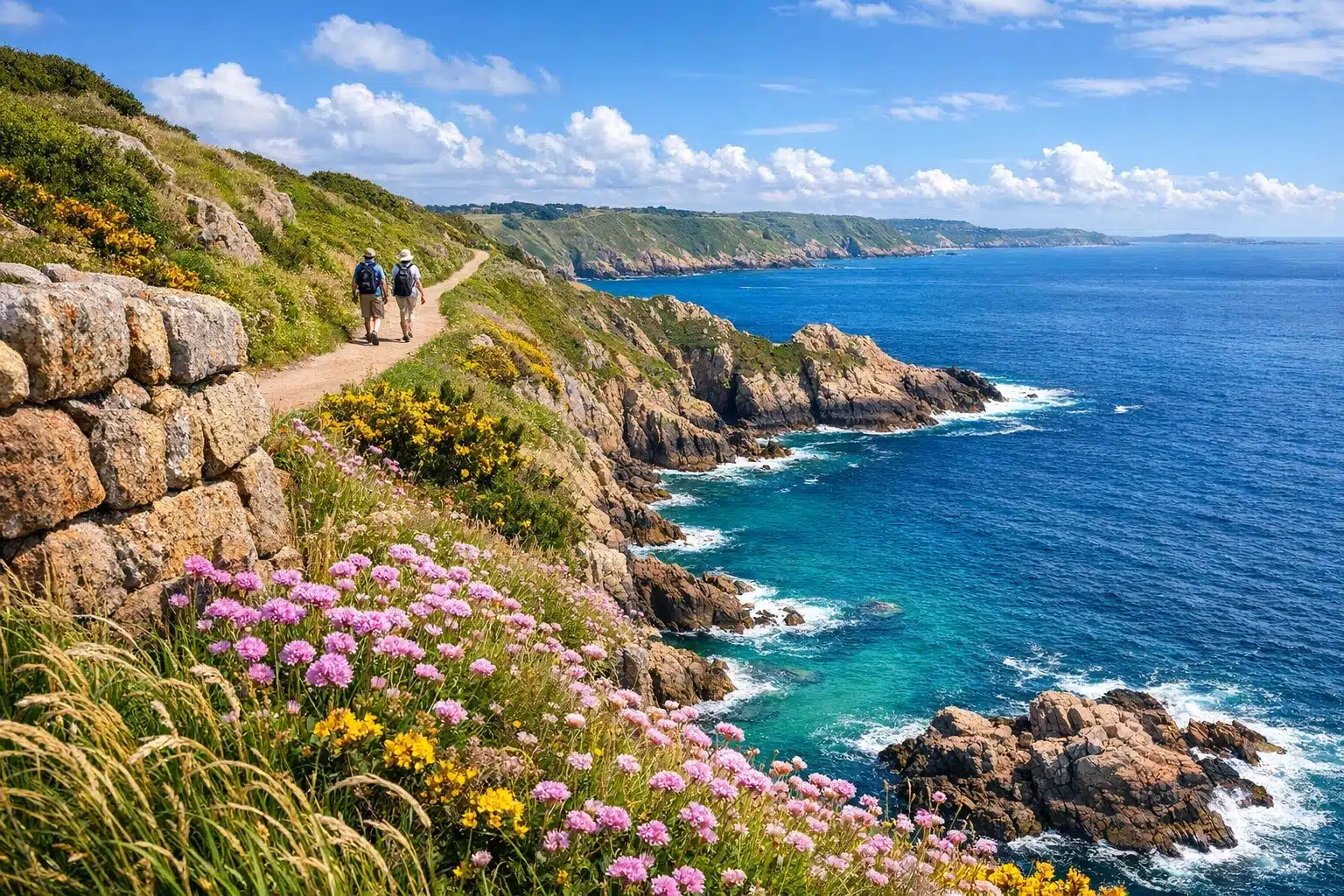
Landscape is the other essential half of the experience. The island’s cliff paths, bays, and sea views are not decorative extras; they are central to why people come. Good tour planning usually leaves room for:
- Short guided coastal walks with commentary
- Free time at beaches such as broad west coast bays or smaller coves
- Scenic drives that help less mobile travellers enjoy the island fully
- Optional boat trips to nearby islands, weather permitting
Island-hopping deserves special mention. Some premium packages include a day trip to Herm or Sark, while others offer it as an optional extra. This can meaningfully lift the value of a trip. The nearby islands add contrast and show how varied the Channel Islands experience can feel over a short distance. If your package includes one of these excursions, check whether boat fares, transfers, and entry arrangements are all covered.
Food also matters, though not only in the obvious “meals included” sense. Guernsey rewards travellers who leave space for local eating. A package that includes every lunch may sound convenient, but it can reduce your chance to try independent spots near the harbour or along the coast. In many cases, half board is the better formula: breakfast and dinner are arranged, while midday remains yours. That gives you room for seafood by the water, a bakery stop between walks, or simply a café lunch that turns into an hour of people-watching.
The strongest tours know something many hurried itineraries forget: Guernsey is not a place to conquer. It is a place to notice. The best experience list therefore mixes headline sights with softness around the edges, allowing the island to reveal itself in the pauses between planned moments.
Conclusion: Who a Guernsey All-Inclusive Tour Suits Best and How to Book Wisely
Guernsey is especially well suited to travellers who want a holiday that feels calm, coherent, and gently enriching rather than relentlessly busy. If you enjoy heritage, sea views, walkable town areas, and the comfort of having the practical details arranged in advance, an all-inclusive or semi-inclusive package can be an excellent fit. It works particularly well for couples, first-time Channel Islands visitors, solo travellers who want structure without isolation, and older guests who would rather spend their energy enjoying the island than assembling the trip piece by piece.
That does not mean every package is equally good. The right choice depends on your pace, not just the price. A cheaper offer can become poor value if it is based in an inconvenient location, trims worthwhile excursions, or includes meals in a way that removes your freedom to explore. On the other hand, a slightly more expensive tour may prove better if it covers transfers, quality accommodation, and a few strong experiences that would otherwise take time and money to organise independently.
Before booking, it helps to ask a small set of practical questions:
- Is this a true escorted tour, or mainly a hotel stay with add-on excursions?
- How many meals are included, and are they flexible?
- What free time is built into the itinerary?
- Is the hotel base central, scenic, or remote?
- Are boat trips and attraction entries included in the headline price?
- What happens if weather affects the schedule?
Season also influences the experience. Late spring and early autumn often appeal to travellers who want milder crowds and a little more breathing room, while summer brings longer days and a livelier atmosphere. Neither is universally better. The key is matching the season to your interests, whether that is walking, sightseeing, photography, or simply sitting outside with lunch and letting the day stretch.
For the right traveller, Guernsey offers something many destinations talk about but do not always deliver: ease without emptiness. The island can be organised without feeling packaged to death. It can feel elegant without becoming formal. And when the itinerary is chosen well, it leaves you with that rare holiday sensation of having truly been away, even if the journey was not especially long. If that sounds appealing, Guernsey is not just a convenient island break. It is a thoughtful one.