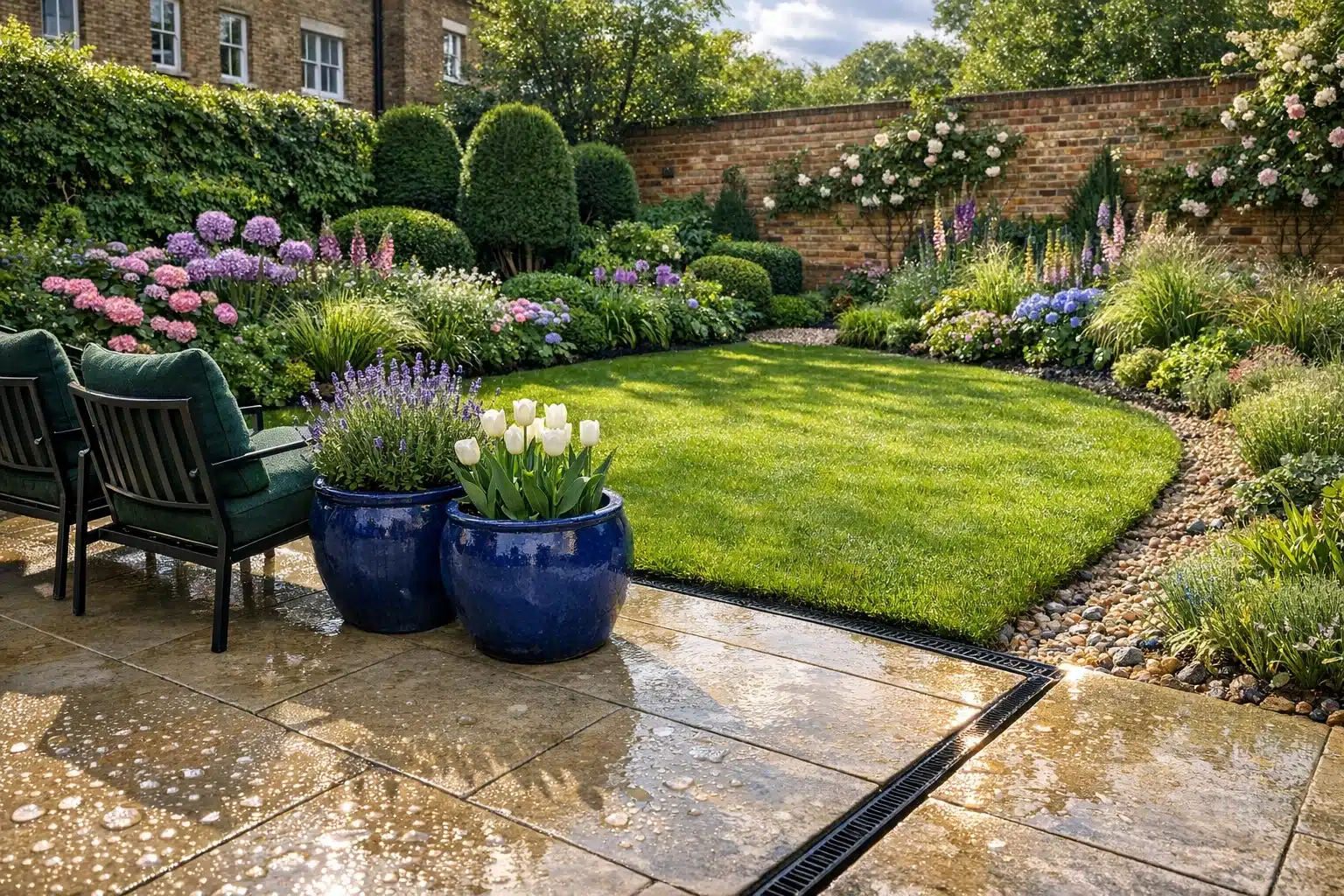
UK Garden Drainage Problems: What Many Homeowners Overlook
A garden renovation in the UK often begins with dreams of cleaner borders, fresh paving, and a lawn that survives winter, yet drainage is the hidden issue that decides whether those upgrades last. One heavy spell of rain can turn a beautiful plan into puddles, moss, compacted soil, and damp edging. Understanding how water moves through your site is not a technical extra; it is the foundation of a garden that remains healthy, practical, and enjoyable.
Article Outline
- Why drainage problems appear so often in UK gardens
- How to diagnose the real source of waterlogging before work begins
- Which renovation methods solve different types of drainage failure
- How to design a garden that stays functional in wet weather
- How to budget, plan, and maintain the finished space for long-term results
Why Drainage Problems Appear in UK Gardens
Drainage issues are easy to underestimate because they do not always announce themselves dramatically. Sometimes the warning signs are obvious, such as standing water on a lawn after a storm. More often, they arrive quietly: paving that greens over faster than expected, borders that stay sticky for days, fence posts that rot early, and plants that look tired despite regular care. In many UK gardens, the problem is not simply “too much rain.” It is the combination of rainfall, soil type, slope, past building work, and the way water has been redirected over time.
The UK has wide regional differences in rainfall, but even drier parts of the country can experience short, intense downpours that test a garden’s ability to absorb or move water. Older properties often have another complication: decades of small changes. A shed base may have interrupted a natural fall in the ground. A patio may have been laid too high. A replacement driveway may now push runoff toward the rear garden. These changes can act like tiny edits to a landscape story, and eventually the final chapter is written in puddles.
Soil is one of the biggest factors. Clay-heavy soil, which is common in many parts of England, drains more slowly because its particles are fine and tightly packed. Sandy soil usually drains faster, but it can dry out quickly in summer and may still suffer if a hard layer beneath it blocks deeper drainage. Loam sits somewhere in the middle and is often easiest to manage. The comparison matters because two gardens can receive similar rainfall and behave very differently. One dries within hours; the other stays soggy for several days.
Common overlooked causes include:
- Compacted ground from foot traffic, builders, or machinery
- Patios or paths laid without a suitable fall
- Downpipes discharging onto already saturated areas
- Raised beds or edging that trap rather than guide water
- Subsurface rubble from old construction work
- Lawns installed over poor-quality topsoil
Homeowners also tend to focus on the visible surface rather than the hidden route water takes. A puddle may appear in one corner, but the real source could be a roof downpipe twenty feet away or a neighbouring level change that sends runoff across the boundary. That is why drainage should be seen as a site-wide question, not a single wet patch to be treated in isolation. When planning renovation, the smartest starting point is to accept that water is never random. It follows gravity, finds weak points, and exposes every shortcut. If the existing garden struggles in winter, new turf or prettier paving alone will not solve it.
How to Diagnose the Real Cause Before Renovation Starts
The most expensive drainage mistake is not choosing the wrong product; it is solving the wrong problem. Before any trench is dug or any paving is lifted, spend time observing how the garden behaves. A site visit during or soon after steady rain is far more useful than a bright weekend inspection in late spring. Water reveals the garden’s map when conditions are wet. You can see where it pools, which surfaces shed it quickly, and how long saturated areas remain soft underfoot.
Start with a simple visual survey. Look for low spots, worn channels, algae on paving, and places where the grass is thinner than the surrounding area. Check whether water is gathering against the house, garage, or retaining walls. Note the position of drain covers, gullies, and downpipes. A garden may appear level to the eye while actually having several subtle dips that trap runoff. Using a long straightedge, string line, or laser level can help reveal small changes in height that matter more than people expect.
Next, test the soil. A basic percolation check can be very informative. Dig a small hole, fill it with water, let it drain once, then refill it and observe how quickly the second fill disappears. This is not a full engineering assessment, but it gives a practical sense of whether the ground absorbs water freely or slowly. Also inspect the soil profile as you dig. Healthy topsoil with organic matter usually feels crumbly. Compacted ground feels dense and smeared. Rubble, builder’s waste, or a heavy clay layer can explain why surface fixes have failed in the past.
Compare different symptoms carefully:
- If the lawn is wet but the borders are fine, compaction may be the main issue.
- If the patio dries slowly while adjacent beds are normal, the paving may have poor falls or blocked joints.
- If one corner floods only during heavy rain, runoff from roofs or neighbouring land may be involved.
- If an area stays boggy for a week or more, the subsoil may be restricting infiltration.
Drainage diagnosis should also include what sits beyond the fence. In terraced or sloping streets, water may travel from adjoining plots, and boundary walls can behave like dams. Equally, a newly paved area at the front of a property may alter the flow reaching the back. If you are renovating a larger garden or dealing with recurring flooding near buildings, it is sensible to bring in a landscape contractor, drainage specialist, or surveyor. Professional advice is particularly valuable where there are retaining structures, basements, or concerns about foundations.
Good diagnosis takes patience, but it pays for itself. Many homeowners rush into installing a French drain or replacing turf, only to discover that the true culprit was a blocked gully, a misdirected downpipe, or a patio laid almost flat. The garden is telling you what is wrong. The trick is to listen before you buy materials.
Choosing the Right Renovation Fix: From Soil Care to Drainage Systems
Once the cause has been identified, the renovation stage becomes far more strategic. There is no single best drainage solution for every UK garden because different failures need different responses. In some cases, the answer is surprisingly modest. In others, a proper system of grading, channels, and subsurface drainage is the only durable route. The key is matching the fix to the flow.
For lawns and lightly compacted areas, soil improvement can make a meaningful difference. Aeration helps open the surface, allowing water and air to move more freely. Topdressing with compost and sharp sand is sometimes used, although the exact mix should suit the soil rather than follow a one-size-fits-all formula. Organic matter improves structure over time, especially in tired ground. This approach works best where the main issue is compaction, not where runoff from hard surfaces is overwhelming the space.
Regrading is often overlooked because it sounds disruptive, yet it is one of the most effective solutions. Even a small adjustment to levels can help water move away from buildings and toward a suitable collection or infiltration point. A patio, for example, needs an appropriate fall so rainwater does not sit against thresholds or seep into joints. Lawns benefit from subtle shaping rather than deep hollows. Think of the garden as a shallow basin being redrawn; the art lies in changing the lines so water has a safe route to follow.
Where surface water needs to be intercepted, drainage channels and gullies can be useful. These are common along the edge of paving, at the foot of steps, or in front of garages and doors. They are good at collecting water quickly, but they need somewhere lawful and sensible to discharge. Simply moving the problem from one point to another is not a real solution. Subsurface options such as land drains, often called French drains in general conversation, can collect water from the ground itself and guide it toward an outlet. They are helpful in persistently wet zones, though performance depends on proper installation, clean stone backfill, and suitable fall.
Soakaways are another option, especially when runoff can be dispersed into ground that drains well enough and is appropriately positioned. They are not suitable everywhere, particularly on very slow-draining soils or where space is limited. Rain gardens and swales offer a softer, landscape-led alternative. Instead of trying to hide water entirely, they slow it, hold it briefly, and allow it to infiltrate or evaporate over time. This approach aligns with the wider principles of sustainable drainage, which aim to manage rainfall close to where it lands rather than forcing everything into pipes.
A practical comparison looks like this:
- Aeration and soil improvement: lower disruption, best for mild compaction
- Regrading: highly effective where levels are wrong, but requires careful planning
- Channel drains: ideal for paved areas, dependent on a proper outlet
- Land drains: useful below ground, less visible once installed
- Soakaways: effective in suitable soil, not a cure-all for clay sites
- Rain gardens: attractive, ecological, and helpful where space allows
In many successful renovations, the answer is a combination rather than a single product. A garden might need improved lawn structure, a re-laid patio with correct falls, and a planted area designed to hold overflow during heavy rain. That layered approach usually performs better because it respects the complexity of the site. Water is patient. Your renovation should be, too.
Designing a Garden That Stays Functional in Wet Weather
Drainage should not be treated as an invisible engineering chore that happens before the “real” garden begins. It is part of the design itself. In fact, some of the most successful renovated gardens are those that use wet-weather planning to improve beauty, comfort, and year-round usability. When drainage is considered early, the layout becomes more logical: seating areas stay dry, paths remain safe, plants are matched to conditions, and maintenance gets easier.
A practical design starts with zoning. Ask which parts of the garden need to stay usable during wet periods and which can be more flexible. A dining terrace, access route, bin area, or path to a home office should have dependable drainage and firm footing. A farther corner of the plot can often work as a rain garden, wildlife patch, or moisture-tolerant planting zone. This is smarter than trying to force every square metre into the same dry, flat, lawn-dominated formula. A garden does not have to behave like an indoor floor plan to work well.
Material choice matters. Impermeable paving looks crisp when first installed, but if it sheds water rapidly and sits on poor levels, it can make existing problems worse. Permeable block paving, gravel stabilisation systems, resin-bound surfaces designed for permeability, and wider planted joints between slabs can all help reduce runoff. Each option has trade-offs. Gravel is usually good for infiltration and has a softer appearance, but it can migrate and may not suit every accessibility need. Large porcelain slabs are low maintenance and contemporary, though they rely heavily on precise falls and outlet planning. The right answer depends on the household as much as the garden.
Planting is another powerful tool. Some species dislike winter wet, while others are perfectly comfortable with heavier conditions. Moisture-tolerant perennials, ornamental grasses, and shrubs can turn a problem zone into a feature rather than a failure. Raised beds can improve growing conditions for plants that need better drainage, while the lower surrounding ground can support species happier in damp soil. This kind of contrast often gives a garden more character. Instead of a flat, uniform space, you get layers, texture, and a sense that the site has been understood rather than erased.
Useful design ideas include:
- Keep key paths direct, well-drained, and slightly raised where practical
- Use edging that guides water without trapping it
- Position seating on the driest, sunniest section of the plot
- Reserve persistently damp corners for planting with ecological value
- Reduce large uninterrupted areas of hard surface where possible
- Include water but control it, for example with a rain garden rather than random pooling
There is also a quality-of-life argument here. A poorly drained garden is used less, especially in autumn and winter. People avoid stepping onto the lawn, children churn up the mud, and everyday tasks become awkward. A well-designed renovation changes that rhythm. It lets the space carry on through the seasons. Even on a grey afternoon, when the sky hangs low and the paving is darkened by rain, the garden can still feel composed and welcoming rather than defeated by weather. That is the real achievement of good drainage-aware design: not dryness at all costs, but dependable function with visual calm.
Budget, Regulations, and Maintenance for Long-Term Results
Garden drainage renovation is one of those projects where careful planning often saves more money than bargain shopping. Homeowners naturally compare the price of materials, but the bigger financial question is sequencing. If drainage work is needed, it is usually cheaper and cleaner to address it before new paving, turf, walls, or planting go in. Installing a drain after a patio is complete can mean lifting finished work, disturbing bedding layers, and paying twice for labour. In renovation, the hidden order of jobs matters almost as much as the visible finish.
Set priorities by separating essentials from enhancements. If water is sitting near the house, undermining paths, or making parts of the garden unusable, drainage should come before decorative upgrades. If the site functions reasonably well but could perform better, improvements can be phased. A sensible plan might begin with investigation and level correction, continue with drainage installation where required, and end with surfacing and planting. This staged approach reduces the temptation to spend heavily on the surface while leaving the structural cause untouched below.
Regulations and local requirements should also be checked before work begins. In the UK, expectations around surface water management generally favour dealing with rain where it falls rather than directing extra runoff into public systems. Rules can vary by location and by the nature of the work, especially for larger hard-landscaping projects, listed properties, or areas with specific planning controls. If the renovation involves substantial changes to levels, drainage connections, retaining structures, or work close to buildings, getting professional guidance is wise. It is easier to adjust a plan on paper than after trenches are open.
Budgeting should include more than visible products. Allow for:
- Site investigation and possible professional advice
- Excavation and removal of spoil
- Drainage aggregates, geotextiles, pipes, and inspection points
- Making good after installation
- Reinstating planting or turf
- Ongoing maintenance once the project is complete
Maintenance is where many otherwise good renovations quietly fail. Drains block, gravel fills with silt, gutters overflow, and planted areas become compacted again. A simple seasonal routine can preserve performance for years. In autumn, clear leaves from gullies and channels. In winter, watch how the garden behaves after prolonged rain. In spring, aerate tired lawn areas and top up organic matter where structure has declined. In summer, inspect cracks, settlement, or signs that runoff is starting to follow a new route. None of these tasks are glamorous, but together they protect the investment.
For UK homeowners, the best mindset is not to chase a perfect garden that never gets wet. That standard is unrealistic and unnecessary. The goal is a landscape that handles ordinary rainfall, recovers well after heavier spells, and avoids chronic waterlogging. When budgeting, planning, and maintenance all support that goal, the renovation stands a much better chance of lasting.
Conclusion for UK Homeowners
If your garden struggles every winter, the problem is rarely solved by cosmetic upgrades alone. The most reliable renovations begin with observation, continue with a clear diagnosis, and use the right mix of grading, soil improvement, drainage, and design. For homeowners in the UK, where wet weather can expose every weak point in a landscape, this approach is not excessive; it is practical. Treat drainage as the framework of the project, and the result is far more likely to be a garden that looks good, works properly, and invites you outside throughout the year.