2026 Portugal 7-Day All-Inclusive Tour Packages: Multiple Options
Portugal packs a surprising amount into one week: grand city squares, Atlantic cliffs, tiled villages, cellar-lined riverbanks, and dinners that linger long after sunset. That is why 7-day all-inclusive tours remain such a practical choice for travelers who want structure without spending months planning every stop. In 2026, the appeal is even clearer as visitors compare comfort, pacing, and value across very different package styles. This guide breaks down the main options so you can quickly see which itinerary matches your budget, interests, and travel rhythm.
Outline: What a 7-Day All-Inclusive Portugal Tour Should Cover
Before comparing specific package styles, it helps to understand what a strong 7-day all-inclusive Portugal tour is supposed to achieve. Seven days is long enough to experience Portugal’s contrasts, but short enough that every transfer, hotel choice, and sightseeing block matters. A weak itinerary tries to do too much and leaves travelers staring out a bus window. A strong one balances geography, cultural depth, meals, and free time so the trip feels full rather than rushed.
Most Portugal tours built around one week follow one of three patterns: a city-and-culture route, a coast-and-relaxation route, or a heritage-and-wine route. The first usually centers on Lisbon, Sintra, and Porto. The second leans toward Lisbon and the Algarve, with more beach time and scenic drives. The third often starts in Porto and moves through the Douro Valley and Coimbra before finishing in Lisbon or returning north. Each option is valid, but each serves a different kind of traveler.
- City-focused tours suit first-time visitors who want landmarks, history, and walkable neighborhoods.
- Coastal tours fit couples, summer travelers, and anyone who prefers a lighter pace.
- Heritage and wine routes work well for return visitors or travelers who want regional depth.
One important point often hidden in brochure language is the meaning of “all-inclusive.” In European touring, the term usually covers accommodation, airport transfers, ground transport, guided sightseeing, breakfasts, and a set number of lunches or dinners. It does not always mean open-bar resort treatment, unlimited extras, or every attraction fee under the sun. Travelers should check whether the package includes entrance tickets to Sintra palaces, Douro boat rides, fado evenings, or winery tastings, because these can noticeably change the total value.
This article follows that same structure. First, it compares the most popular classic itinerary for first-time visitors. Next, it explores a coastal version built around Lisbon and the Algarve. Then it looks at a more regional route through Porto, the Douro, and Central Portugal. Finally, it compares inclusions, pricing logic, seasonal differences, and which package type makes the most sense for families, couples, solo travelers, and older travelers. Think of this as a practical map before the actual map unfolds.
Option 1: Classic Lisbon, Sintra, and Porto for First-Time Visitors
If someone says, “I have one week in Portugal and want the highlights,” this is usually the itinerary they mean. A classic 7-day package generally begins in Lisbon, adds a day trip or overnight stop in Sintra, and then continues to Porto, sometimes with a short stop in Coimbra, Óbidos, Fátima, or Nazaré. It is the most efficient introduction to the country because it combines royal history, urban life, architecture, food culture, and a manageable amount of distance.
Lisbon usually takes the first two or three days. That gives enough time for the historic center, the Belém district, and a few panoramic viewpoints without reducing the city to a checklist. Travelers often visit Praça do Comércio, Alfama, São Jorge Castle viewpoints, Jerónimos Monastery, and the Belém Tower area. An organized package adds value here because Lisbon is hilly, spread out, and full of tempting detours; guided transport and timed entry help save hours. A well-built tour also leaves some unstructured time for wandering, which matters in a city where the charm often appears between planned stops, not only at them.
Sintra is the dream sequence in the middle of the trip. With its forested hills, palace silhouettes, and shifting Atlantic mist, it feels like a place imagined before it was built. Package tours usually include Pena Palace exterior or interior access, the historic center, and possibly Quinta da Regaleira or Cabo da Roca. This is one of the clearest examples of why guided logistics help. Parking is limited, roads are narrow, and peak-season queues can be punishing. A prearranged visit is simply easier.
Porto then delivers a different mood from Lisbon. It is more compact, river-oriented, and intimate in scale, yet it carries immense cultural weight. The Ribeira district, Dom Luís I Bridge, São Bento Station, and the famous port wine cellars in Vila Nova de Gaia are common inclusions. The rail journey between Lisbon and Porto is roughly 2 hours 50 minutes on fast services, but many tour packages prefer coach transfers with sightseeing stops to increase the sense of progression.
- Best for: first-time visitors, families with older children, and travelers who want a broad introduction.
- Main strengths: famous landmarks, excellent balance, easy storytelling value.
- Possible drawback: slightly faster pace than coastal or regional packages.
As a 7-day option, this route is often the safest choice because it delivers the names people recognize and the experiences they remember. It is not the most relaxed version of Portugal, but it is often the most complete.
Option 2: Lisbon and the Algarve for Travelers Who Want Sun, Space, and a Slower Pace
Not every visitor wants to spend a week racing between monuments. For travelers who want a softer rhythm, the Lisbon-and-Algarve package is often the smarter all-inclusive option. It still begins with Portugal’s capital, but instead of heading north to Porto, it turns south toward the Algarve, the country’s best-known coastal region. That one change transforms the character of the entire trip. The result is less about collecting major city landmarks and more about balancing urban discovery with sea views, resort comfort, and scenic downtime.
The first part of this route usually mirrors the classic itinerary in a shorter form: one or two nights in Lisbon with a guided city tour, perhaps Belém, Alfama, and a tram or walking experience through the old quarters. After that, the group heads south, often through the Alentejo or with a stop in places such as Évora, depending on the operator. This is where the road starts to feel cinematic. The landscape widens, the tempo changes, and the architecture moves from dense urban façades toward whitewashed towns and broad horizons.
The Algarve portion typically focuses on towns such as Lagos, Albufeira, Tavira, or Portimão, though the exact base depends on whether the package leans upscale, active, or family-friendly. Algarve all-inclusive tours tend to include more hotel-based amenities than city packages. That might mean larger pools, easier parking for coaches, spa access, or resort-style meal service. Some programs add boat excursions to coastal caves, guided walks along cliff paths, or market visits in smaller towns. Ponta da Piedade near Lagos and the dramatic rock formations around Benagil are frequent visual highlights, even if the exact excursion format changes by season and sea conditions.
This option is especially attractive from late spring through early autumn, when beach weather is reliable and daylight stretches far into the evening. The trade-off is that it covers less of Portugal’s urban and historical core than a Lisbon-Porto tour. Travelers who skip Porto are choosing atmosphere over breadth, and that is not a mistake; it is simply a different priority.
- Best for: couples, summer travelers, honeymoon-style trips without luxury excess, and anyone who wants built-in relaxation.
- Main strengths: fewer hotel changes, coastal scenery, resort comfort, and easier downtime.
- Possible drawback: less exposure to northern Portugal and fewer landmark-heavy city visits.
If the ideal week includes tiled streets in the morning and an oceanfront sunset by evening, this route makes a compelling case. It is Portugal with its shoes off.
Option 3: Porto, Douro Valley, Coimbra, and Central Portugal for Deeper Regional Flavor
Some travelers are less interested in “seeing the essentials” and more interested in feeling the country from the inside. For them, a 7-day all-inclusive tour focused on Porto, the Douro Valley, Coimbra, and nearby heritage towns can be the most rewarding option. This style usually begins in Porto and then expands through northern and central Portugal rather than following the standard Lisbon-first formula. It feels more layered, less obvious, and often more memorable for travelers who enjoy food, wine, academic history, and landscapes with a quieter dignity.
Porto is a strong starting point because it combines beauty with scale. The city is compact enough to explore meaningfully in two days, yet rich enough to support guided walks, river views, and cellar visits without feeling repetitive. The Historic Centre of Porto is a UNESCO World Heritage Site, and many packages include São Bento Station, the cathedral area, the Ribeira waterfront, and a tasting in Vila Nova de Gaia. Unlike broader intro itineraries, these packages may spend more time on the city’s commercial and maritime history, including the role of port wine in shaping regional identity.
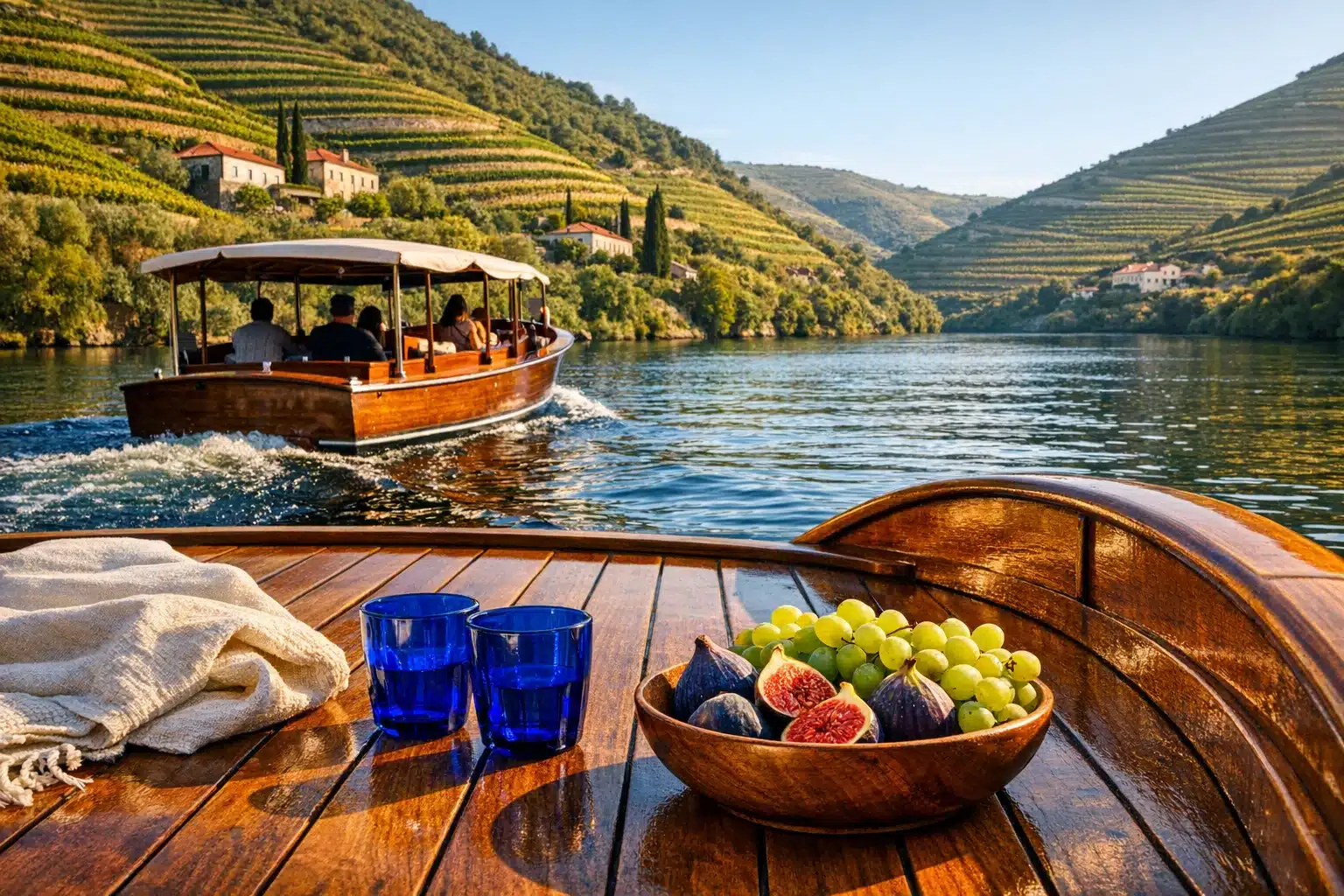
The Douro Valley adds another dimension. The terraced vineyards along the Douro River create one of Europe’s most distinctive cultural landscapes, and the Alto Douro Wine Region is also recognized by UNESCO. A quality all-inclusive package often includes a scenic river cruise or a guided winery visit with tasting. Even travelers who are not especially wine-focused tend to enjoy this section because the landscape itself carries the day. It is one of those places where the road bends, the light changes, and suddenly the bus goes quiet.
Coimbra, home to one of Europe’s oldest universities, introduces a different form of heritage. Here the emphasis shifts from trade and wine toward scholarship, music, and historical continuity. Depending on the package, travelers may also visit Aveiro, Guimarães, Braga, or smaller towns with Romanesque, medieval, or monastic significance. These additions make the trip feel more regional and less standardized.
- Best for: repeat visitors, food-and-wine travelers, culturally curious couples, and slower-paced small groups.
- Main strengths: depth, scenery, strong regional identity, and less tourist saturation than the most famous circuits.
- Possible drawback: fewer headline landmarks than the classic Lisbon-Sintra-Porto route.
This option does not try to summarize all of Portugal in seven days. Instead, it offers a more selective portrait, and that selectiveness is exactly where its value lies.
Comparing Inclusions, Prices, Timing, and How to Choose the Right 2026 Package
Once the route is clear, the real decision comes down to inclusions, pacing, and total value. This is where many travelers make avoidable mistakes. Two 7-day tours can look similar on the booking page and still offer very different experiences on the ground. One may include four guided excursions, two dinners, airport transfers, and monument entry fees. Another may cover hotels and coach transport but leave several of the most appealing activities optional. That is why smart comparison starts with what is actually bundled, not just the headline price.
For Portugal, travelers researching 2026 packages should usually compare these core items first:
- Hotel category and location: a centrally located 4-star in Lisbon can save time and taxi costs compared with a distant suburban hotel.
- Meals: many tours include daily breakfast and a few dinners, but lunch coverage varies widely.
- Entrance fees: palace tickets in Sintra, cellar tastings in Porto, and boat cruises in the Douro or Algarve can shift the value equation.
- Transport style: private coach travel is simple, while rail-based packages may offer faster city connections and more independence.
- Group size: smaller groups usually mean better flexibility, but often at a higher per-person cost.
Season also matters. Spring and early autumn are often the best-value windows because temperatures are pleasant, crowds are more manageable, and hotel rates are generally more moderate than midsummer. The Algarve shines in summer, but the north and central regions are often most comfortable in May, June, September, and October. Winter tours can be excellent for city sightseeing in Lisbon and Porto, though beach expectations should be lowered and some coastal excursions may be less predictable.
As a broad rule, classic city packages usually offer the best first-trip value because they concentrate famous sights into one efficient week. Lisbon-and-Algarve tours provide stronger comfort value for travelers who want fewer hotel changes and more leisure. Porto-Douro-Central Portugal routes often deliver the best cultural value for travelers who already know they prefer depth over coverage. None is universally better; the right package depends on whether your personal definition of a good holiday is “I saw the icons,” “I finally relaxed,” or “I learned something new every day.”
Conclusion for 2026 Travelers
If you are choosing a 7-day all-inclusive Portugal tour for 2026, start with your travel style before you look at the brochure photos. First-time visitors will usually be happiest with the Lisbon, Sintra, and Porto circuit because it captures the country’s most recognizable experiences in one compact week. Beach-minded travelers and couples may get more satisfaction from a Lisbon-and-Algarve itinerary that leaves space for sea air, resort comfort, and unhurried evenings. Meanwhile, travelers who care about wine, regional identity, and deeper storytelling should give serious attention to Porto, the Douro, and Central Portugal. Portugal rewards all three approaches; the winning package is the one that feels designed for the way you actually like to travel.