Explore Edinburgh Weekend Getaways in 2026 – All-Inclusive Travel Guide
Edinburgh is one of those rare cities where a two-day break can still feel expansive, because medieval closes, grand Georgian streets, green hills, and serious museums sit within a compact and walkable core. In 2026, that makes it especially relevant for travelers who want a short trip with substance rather than a rushed checklist. This guide maps out what to see, where to stay, how to move around, and when to book, so your weekend feels deliberate, relaxed, and full of memorable detail.
Outline
1. Why Edinburgh works so well for a weekend in 2026. 2. How to build a smart two-day itinerary across the city’s key districts. 3. Which attractions, food stops, and local experiences deserve space in a short trip. 4. How to compare transport, accommodation areas, and likely costs. 5. When to visit in 2026, how to adapt your plan by season, and what kind of traveler gets the most from this getaway.
Why Edinburgh Works So Well for a Weekend in 2026
Edinburgh suits the weekend-break format better than many larger European capitals because it delivers contrast without demanding long internal travel times. In one day, you can move from volcanic viewpoints to Georgian terraces, from a castle on black rock to a waterfront meal in Leith, and from a museum gallery to a candlelit pub without spending half the day on complicated transfers. That compactness is not just convenient; it changes the mood of the trip. Instead of constantly calculating logistics, you can let the city unfold at walking pace, which is exactly where Edinburgh becomes most persuasive.
For 2026 travelers, the city’s practical strengths remain clear. Edinburgh Airport is well connected, and the tram link to the center usually makes the journey into town straightforward. Waverley Station sits near the heart of the city, which means train arrivals drop visitors close to the Old Town, Princes Street, and many central hotels. Once you are in the center, a surprising amount of the classic Edinburgh experience can be covered on foot. That matters for short breaks, because wasted travel time is usually the hidden cost of a weekend trip.
Edinburgh also offers an unusually strong mix of experiences for different kinds of visitors:
• History-focused travelers get the Royal Mile, Edinburgh Castle, Holyrood Palace, and layered architecture from medieval to Georgian periods.
• Culture-minded visitors can choose from major museums, galleries, bookshops, theaters, and seasonal festivals.
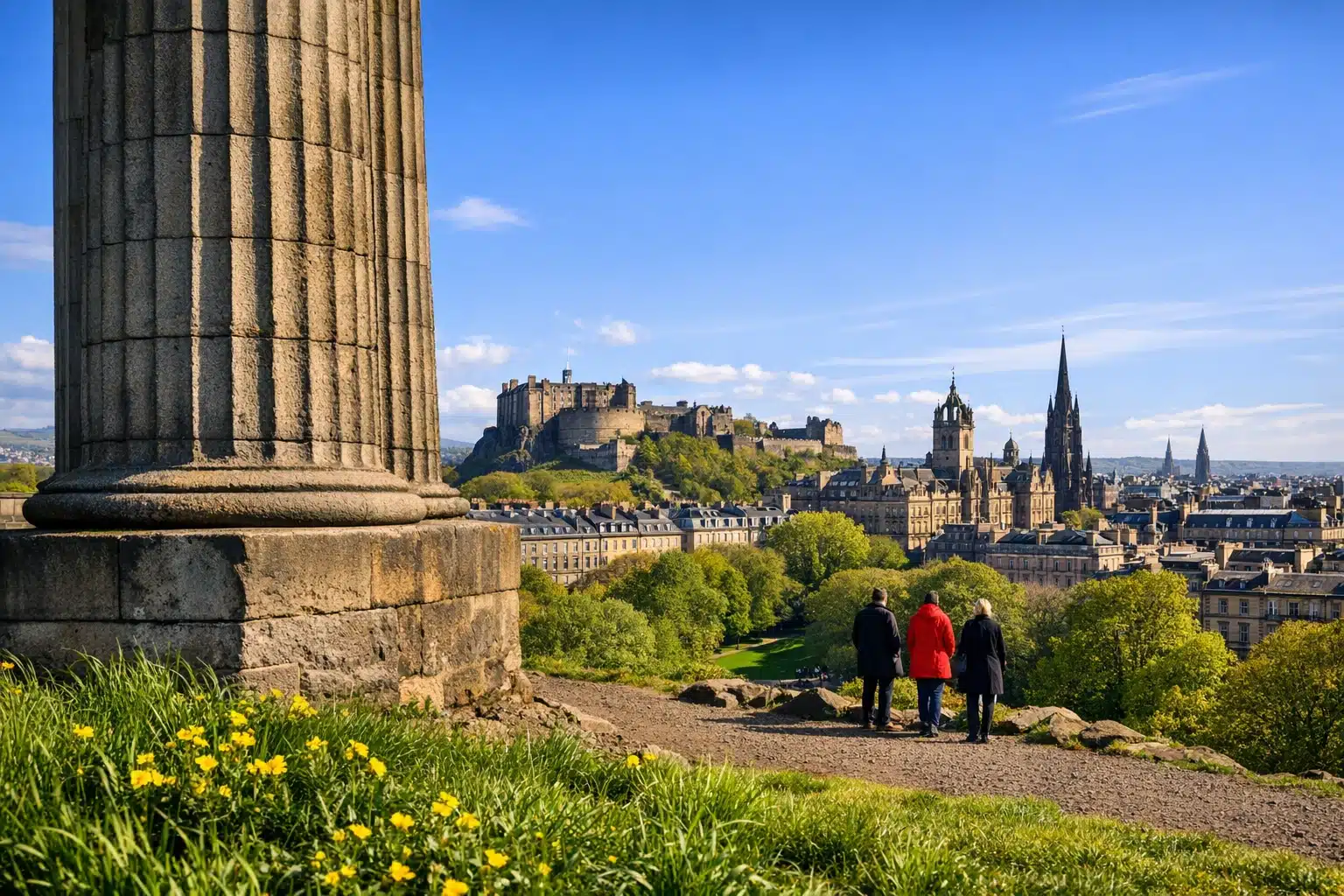
• Scenic travelers have Arthur’s Seat, Calton Hill, Dean Village, Inverleith Park, and dramatic coastal access not far from the center.
• Food-oriented visitors can move from traditional Scottish dishes to modern tasting menus, neighborhood bakeries, and seafood in Leith.
Compared with London, Edinburgh is easier to absorb in a short time and usually less exhausting. Compared with smaller postcard cities, it offers more depth and variety. Compared with resort breaks, it gives a strong sense of place even when the trip lasts only two nights. The skyline itself helps: spires, stone facades, and ridgelines create a theatrical backdrop that makes ordinary walks feel cinematic. It is a city that often looks as if it were designed by a novelist with a weakness for weather and towers.
Another reason Edinburgh stays relevant in 2026 is that modern travel habits favor shorter, more intentional trips. Many people want a break that feels rich but manageable, especially when they are balancing work schedules, school calendars, or rising travel costs. Edinburgh answers that need better than most. It does not require a car for a central stay, it rewards planning without punishing spontaneity, and it offers enough substance to satisfy first-time visitors while still leaving reasons to return. That combination of efficiency, atmosphere, and range is what keeps Edinburgh near the top of the weekend-getaway list.
How to Build a Smart Two-Day Itinerary Across the City
The best Edinburgh weekend itinerary is not the one that squeezes in every landmark. It is the one that groups nearby experiences intelligently, leaving time to notice the city between destinations. Edinburgh is built on slopes, views, and transitions, so the route matters almost as much as the stops. A smart plan usually divides the trip by area rather than by theme, which reduces backtracking and gives each part of the city room to make its own impression.
A classic first day works well in the Old Town. Start early at Edinburgh Castle, one of the city’s most visited sites and one of the attractions most worth booking in advance. From there, descend the Royal Mile rather than rushing through it. The appeal of this stretch is not only the headline buildings but also the side closes, courtyards, and subtle shifts in atmosphere. You can pause for St Giles’ Cathedral, browse independent shops, visit the Museum of Edinburgh or the Writers’ Museum depending on your interests, and continue toward Holyrood. If you enjoy major museums, the National Museum of Scotland fits naturally into this day and offers excellent value because general entry is free.
Day two usually works better when it balances elegance with breathing space. The New Town, despite its name, is historic in its own right and notably different from the Old Town’s dramatic medieval texture. Here the streets are broader, the facades more symmetrical, and the mood calmer. George Street, Princes Street, and the surrounding grid can be paired with a walk through Princes Street Gardens, a climb up Calton Hill, or time in the Scottish National Gallery. If the weather is good, Dean Village and the Water of Leith path make a gentle addition that feels almost rural for a few moments, even though you remain close to the city center.
If you want a slightly more local variation, use part of one afternoon or evening for Leith. In earlier years some visitors treated it as an optional extra, but it increasingly earns a place in a weekend plan because it adds a different side of Edinburgh: waterfront energy, strong dining options, and a more contemporary rhythm. It works especially well for dinner after a day of sightseeing.
A strong two-day structure could look like this:
• Day 1 morning: Castle and upper Royal Mile
• Day 1 afternoon: National Museum, lower Royal Mile, Holyrood area
• Day 1 evening: Grassmarket or Old Town dinner
• Day 2 morning: New Town, galleries, shopping streets
• Day 2 afternoon: Calton Hill, Dean Village, or Leith
• Day 2 evening: special meal, whisky tasting, or relaxed pub stop
The main comparison is simple. If you fill the trip only with famous attractions, you get bragging rights but less texture. If you build in neighborhoods, viewpoints, and slow walking time, the city feels more complete. Edinburgh rewards the second approach. Even a short stay can feel spacious when the itinerary leaves room for serendipity: a violinist under stone arches, rain glossing the cobbles, or that sudden turn where the castle appears again like it has been following you all day.
Attractions, Food, and Local Experiences Worth Your Time
A weekend in Edinburgh goes best when you combine signature landmarks with a few lower-pressure experiences. The landmarks matter for a reason. Edinburgh Castle dominates the skyline and offers historical exhibits, military collections, and wide views over the city. The Palace of Holyroodhouse gives a different angle, tying royal history to the lower end of the Royal Mile. St Giles’ Cathedral remains architecturally important, while the National Museum of Scotland is one of the strongest all-weather options in the city. If your time is limited, these are the high-confidence picks.
That said, not every good Edinburgh experience comes with a ticket. Some of the city’s greatest pleasures are scenic and atmospheric. Arthur’s Seat is ideal for travelers who do not mind a moderately active climb and want one of the best panoramas in the area. Calton Hill offers a quicker reward, especially useful at sunrise or golden-hour light. Victoria Street, the Grassmarket, Circus Lane, and the Dean Village area are heavily photographed, but they still justify a visit because they reveal how varied Edinburgh feels over short distances. The city can shift from stern stone grandeur to tucked-away charm in a matter of minutes.
Food deserves more planning than many visitors first assume. Edinburgh is not just a place to sample haggis once for the story and move on. In 2026, a weekend visitor can build meals that reflect both tradition and range. Breakfasts and bakery stops are particularly strong, with good options across the center. Lunch can be as simple as soup and sourdough in a café or as structured as a seafood plate in Leith. Dinner is where the city spreads out:
• Traditional Scottish cooking tends to be easiest to find around central tourist areas, though quality varies, so reviews help.
• Modern Scottish restaurants often focus on seasonal produce, local seafood, and creative presentations.
• Leith stands out for destination dining and a broader sense of culinary experimentation.
• Stockbridge is a smart choice for a more neighborhood-oriented meal or coffee stop.
Whisky experiences also draw weekend visitors, but the best approach depends on your interest level. A beginner may enjoy a guided tasting or an attraction with clear storytelling. A more experienced traveler may prefer a serious whisky bar where staff can recommend regional styles and smaller distillery bottlings. The key distinction is between theatrical presentation and depth. Edinburgh offers both, and neither is wrong; they simply suit different travelers.
When time is short, the most valuable comparison is between passive sightseeing and active engagement. You can photograph the city from a viewpoint, or you can take a themed walking tour and understand the layers under what you see. You can eat near the biggest attractions, or you can travel slightly farther for a meal that becomes part of the memory rather than a pause in it. A strong Edinburgh weekend usually includes both efficiency and character. See the essentials, absolutely, but leave a little room for a small restaurant, an overlooked museum room, or a bookstore where the rain taps the window and suddenly the city feels less like a destination and more like a setting.
Getting Around, Where to Stay, and How Much to Budget
Transport is one of Edinburgh’s strongest advantages for a short break, especially if you stay near the center. The city is highly walkable, but “walkable” in Edinburgh often includes hills, stairs, and cobbled sections, so comfortable footwear matters. Visitors arriving through Edinburgh Airport can use the tram to reach central areas efficiently, while buses provide broad coverage across the city. Waverley Station is central enough that many rail arrivals can simply walk to their hotel. Taxis and ride-hailing options remain useful late at night or if weather turns difficult, but many weekend visitors barely need them.
Choosing where to stay shapes the entire feel of the trip. Old Town is best for travelers who want to step directly into the historic core. It is atmospheric, dramatic, and close to many major sights, but it can be busier, noisier, and more uneven underfoot. New Town offers a more polished, spacious base with handsome streets, shopping, and easier access to restaurants and transport. Haymarket often works well for budget-conscious visitors or those arriving by train from elsewhere in Scotland, while Leith suits travelers who want a food-forward, slightly less tourist-centered stay and do not mind a short tram or bus connection.
A simple comparison looks like this:
• Old Town: most atmospheric, strongest first-time base, often busiest
• New Town: elegant, central, good balance of convenience and comfort
• Haymarket: practical, connected, sometimes better value
• Leith: lively dining scene, more local feel, less classic postcard setting at the doorstep
Budgeting for 2026 depends heavily on season, booking lead time, and your expectations. Edinburgh can be surprisingly expensive during major festival periods and on peak summer weekends. Outside those windows, it can still be costly compared with some UK cities, but smart planning helps. As a broad guide, budget stays may begin around the lower end of the market in hostels or basic rooms, mid-range hotels often fall into a much higher band, and premium city-center properties can rise sharply when demand surges. Dining is similarly flexible: a café breakfast and casual lunch can keep daily costs moderate, while tasting menus or destination restaurants quickly elevate the total.
A realistic weekend budget should account for:
• Accommodation for two nights
• Airport or rail transfers
• One or two paid attractions
• Food across two days, including at least one nicer dinner
• Local transport if you plan to reach Leith or outer neighborhoods
• Weather-related extras such as taxis, museum stops, or indoor alternatives
The best way to control spending is to decide early where comfort matters most. Some travelers prefer a centrally located hotel because it saves time and energy. Others would rather stay slightly farther out and put the difference toward dining or premium experiences. There is no universal right answer. For a short getaway, however, centrality often has hidden value. Saving twenty minutes here and there can turn a rushed itinerary into a relaxed one. In Edinburgh, that shift is significant, because the city is at its best when you have enough margin to wander without checking the clock every ten minutes.
Best Time to Visit in 2026 and How to Match the Weekend to Your Travel Style
There is no single perfect month for an Edinburgh weekend in 2026, because the best time depends on what you want from the city. Summer offers long daylight hours, lively streets, and the broadest outdoor appeal. During August in particular, festival season transforms the atmosphere, filling the city with performances, pop-up venues, and a sense of creative overload that some travelers adore. The trade-off is obvious: higher accommodation prices, heavier crowds, and the need to book well ahead. If you want peak energy, summer is compelling. If you want breathing room, it may not be the ideal choice.
Spring and early autumn are often the strongest balance points. The city still feels active, but lines are generally more manageable and prices may be less extreme than in the high-festival window. Gardens and parks look especially good in spring, while autumn can sharpen the city’s mood in a different way. Stone buildings, shifting light, and cooler air suit Edinburgh unusually well; it is a city that wears dramatic weather like good tailoring. Winter, meanwhile, brings shorter days and colder conditions, yet also offers atmospheric streets, festive markets in the wider seasonal period, and a cozy case for museum visits, whisky bars, and long dinners.
The right weekend also depends on your travel personality:
• First-time visitors usually benefit most from a classic central stay with the castle, Royal Mile, New Town, and one viewpoint.
• Repeat visitors can build around Leith, Stockbridge, Dean Village, galleries, and slower food-focused plans.
• Active travelers may prioritize Arthur’s Seat, long walks, and early starts for views.
• Culture-led visitors may organize the trip around museums, performances, exhibitions, and literary history.
• Couples often lean toward scenic routes, destination dining, and boutique hotels.
• Solo travelers may appreciate the city’s walkability, public transport, and abundance of low-pressure activities.
If your weekend lands in uncertain weather, Edinburgh is still forgiving. You can pivot quickly between outdoor and indoor experiences. A rainy morning can become museum time. A bright break in the clouds can become Calton Hill. A windy afternoon can shift toward galleries, cafés, and historic interiors. That adaptability is a serious advantage, especially in Scotland, where the forecast can change its mind before lunch.
For many 2026 travelers, the ideal strategy is simple: decide which version of Edinburgh you want. Do you want the city at full volume, with crowds and cultural buzz? Choose summer and book early. Do you want a more balanced and navigable experience? Aim for shoulder season. Do you want atmosphere over speed and warmth over variety? Winter can work surprisingly well. Edinburgh rarely feels empty of meaning; it simply changes costume. One weekend may give you bright skies above Arthur’s Seat, another may hand you mist over the Old Town and the smell of coffee on damp stone. Either way, the city tends to leave a mark.
Conclusion for 2026 Weekend Travelers
For travelers planning a short break in 2026, Edinburgh stands out because it combines practical ease with genuine depth. You can arrive quickly, move around without much friction, choose between iconic landmarks and neighborhood discoveries, and tailor the pace to suit your budget and interests. First-time visitors will get the most from a central base and a disciplined two-day plan, while returning travelers can lean into food, local districts, and slower walking routes. If your goal is a weekend that feels cultured, scenic, and satisfying rather than merely busy, Edinburgh remains one of the strongest choices in the UK.