4-Night Beachfront Resort Stay in Sandbanks, Poole
Sandbanks, on the slim peninsula between Poole Harbour and the open sea, turns a short coastal break into something more deliberate and memorable. A four-night beachfront stay matters here because the setting reshapes the whole day: morning walks begin on the sand, lunch can follow a swim, and evening light arrives across the water without effort. For couples, families, and travellers after a polished UK escape, the area blends resort comfort with one of southern England’s most admired beach settings.
Article Outline
- Why Sandbanks stands out within Poole and the wider Dorset coast
- What a four-night beachfront stay usually includes and how to choose the right base
- Beach quality, watersports, family appeal, and nearby outdoor activities
- Dining, local attractions, and practical ways to move around without stress
- Budget, timing, traveller suitability, and a final verdict for short-break planning
Sandbanks in Context: Geography, Reputation, and the Appeal of Staying Right on the Beach
Sandbanks is not a giant resort strip filled with towering hotels and late-night neon. Its appeal is subtler and, for many visitors, stronger because of that restraint. This slender peninsula in Poole, Dorset, sits between Poole Harbour and Poole Bay, creating a setting where water is never an afterthought. On one side, the harbour offers calmer views, marinas, sailing activity, and a softer mood. On the other, the open beach brings broad sand, sea breezes, and the kind of horizon that makes a laptop screen feel suddenly unnecessary. The geography alone gives Sandbanks an advantage over many short-break destinations in southern England.
Its reputation has grown for two main reasons. First, Sandbanks Beach is widely admired for its clean sand, family-friendly layout, and strong visitor facilities. The beach has frequently held Blue Flag recognition, a marker often associated with water quality, safety measures, and environmental standards. Second, the area is regularly mentioned in UK property coverage as one of the country’s most expensive coastal addresses. That does not automatically make it better for every traveller, but it does help explain the polished atmosphere, low-rise architecture, and well-kept public spaces that many guests notice as soon as they arrive.
Compared with Bournemouth, Sandbanks feels quieter, more residential, and less overtly commercial. Bournemouth has greater nightlife, a larger hotel stock, and broader town-centre convenience. Sandbanks, by contrast, trades bustle for breathing room. Compared with Studland, across the chain ferry, Sandbanks is more developed and easier for travellers who want restaurants, serviced accommodation, and straightforward access to Poole. In practical terms, that means it occupies a useful middle ground:
- more refined than a typical busy promenade resort
- more convenient than a remote dune-backed beach
- more scenic than many urban waterfront stays
That balance matters on a four-night trip. A short stay benefits from efficiency. You do not want to spend half your break driving between meals, beaches, and attractions. In Sandbanks, the landscape does some of the work for you. Walk a few minutes and you can move from coffee to sea swim, from marina views to sunset sand, from resort-like comfort to a coastal footpath that feels almost cinematic. The place works best for travellers who value location as an active part of the holiday, not simply as the backdrop to it.
What a 4-Night Beachfront Resort Stay Really Looks Like in Sandbanks
The phrase beach resort can suggest very different things depending on the destination. In Sandbanks, it usually means a high-quality coastal stay with immediate beach access, sea-facing rooms or apartments, good dining nearby, and a more relaxed rhythm than a standard town hotel. It does not usually mean an all-inclusive mega-resort with endless entertainment blocks and wristbands. That distinction is useful because expectations shape satisfaction. Travellers who arrive looking for a calm, stylish, walkable base are often delighted. Those expecting a self-contained holiday complex may find the area more understated than the word resort implies.
Accommodation in and around Sandbanks tends to fall into three broad groups: boutique-style hotels, serviced apartments, and premium holiday lets. Each serves a different type of guest. Hotels are best for couples, weekend extensions, and travellers who want reception support, housekeeping, and an on-site bar or breakfast service. Apartments suit families and longer beach days because they offer more space, kitchen facilities, and flexibility around meals. Holiday homes work well for groups, though prices can rise quickly in peak periods.
For a four-night stay, the strongest advantage is how easily the days can be structured without becoming repetitive. A practical pattern often looks like this:
- Day 1: arrive, settle in, walk the beach, and keep dinner local
- Day 2: focus on sea time, swimming, paddleboarding, or simply proper rest
- Day 3: branch out to Brownsea Island, Poole Quay, Studland, or Bournemouth
- Day 4: return to the beach at a slower pace, adding lunch, reading, or a sunset walk
- Day 5: leave without the feeling that every hour was over-programmed
That rhythm is one reason Sandbanks works so well for short breaks. The best four-night trips leave space for spontaneity. In a busy city hotel, you often need to engineer your downtime. Here, downtime arrives naturally. Open the curtains and the weather already gives you a plan.
When comparing Sandbanks with other UK beachfront stays, one feature stands out: proximity to the sand genuinely changes behaviour. If the beach is across a road, down a cliff lift, or a drive away, people tend to visit it once or twice and then move on. If it is effectively outside the door, they use it differently. Morning coffee becomes a barefoot walk. Children can return for an hour instead of a full expedition. Even bad weather becomes part of the show, with cloud bands and rougher seas turning the view into moving theatre rather than spoiled plans. That is the real value of a beachfront base here: not luxury for its own sake, but ease translated into better use of time.
Beach Quality, Watersports, and the Outdoor Side of a Sandbanks Break
Any article about Sandbanks has to answer a simple question: is the beach itself good enough to justify the premium attached to the location? In most cases, yes. The beach is broad, sandy, and visually clean in a way that immediately appeals to both day visitors and longer-stay guests. Families appreciate the gentler setup compared with rockier or steeper coastal areas, while couples and solo travellers often value the long, open walking space. There is a practical elegance to it. You do not need to work hard to enjoy the setting.
Sandbanks also benefits from being useful in more than one weather mood. On bright summer days, the appeal is obvious: swimming, paddling, lounging, and the sort of low-stakes holiday timetable that revolves around towels and lunch. Outside peak heat, the coastline shifts character rather than losing relevance. A windy afternoon suits brisk walks, dog-friendly exploring in appropriate areas, and sea watching. In shoulder season, the beach can feel less like a family playground and more like a wide, open stage set under fast-moving skies.
For active visitors, the surrounding area offers more than standard seaside routines. Poole Harbour is well known for sailing, and the wider bay supports activities such as paddleboarding, kayaking, and wind-based watersports when conditions are suitable. Beginners often prefer the harbour side because the environment can feel more sheltered, while experienced visitors may seek more challenging conditions elsewhere along the coast. That split is useful because it broadens Sandbanks’ appeal. A group does not need identical interests to share the same base.
- Beach-focused travellers get easy access to swimming and sunbathing
- Families gain convenience, facilities, and short walking distances
- Outdoor enthusiasts can add watersports, coastal paths, and island trips
- Photographers and early risers get changing light across both harbour and sea
There are also worthwhile comparisons to make. Bournemouth offers a larger-scale beach scene and more surrounding entertainment, but it can feel busier and more urban. Studland offers a wilder, softer-edged beauty, yet it has fewer built-in conveniences. Sandbanks sits between those models, which is exactly why many short-break visitors choose it. It combines scenery with practical comfort.
Perhaps the most underrated feature is how walkable the outdoor experience becomes. You can start with a simple shoreline stroll and end up stretching the day into a circuit of viewpoints, cafés, and marina glimpses. The sea is not just somewhere to look at from a balcony. It acts like a thread that ties the break together, pulling even an ordinary afternoon into something a little brighter, saltier, and harder to forget.
Dining, Nearby Attractions, and How to Explore Beyond the Beach Without Losing the Holiday Mood
A four-night stay in Sandbanks works best when the beach is only one part of the story. Fortunately, the surrounding area provides enough variety to prevent the trip from feeling one-note. Poole, Canford Cliffs, Brownsea Island, Bournemouth, and Studland all sit close enough to broaden the experience while still allowing you to return to the shoreline by evening. That matters because short coastal breaks often fail in one of two ways: either they become overpacked with driving, or they stay so limited that the destination feels exhausted after a day and a half. Sandbanks avoids both problems when planned sensibly.
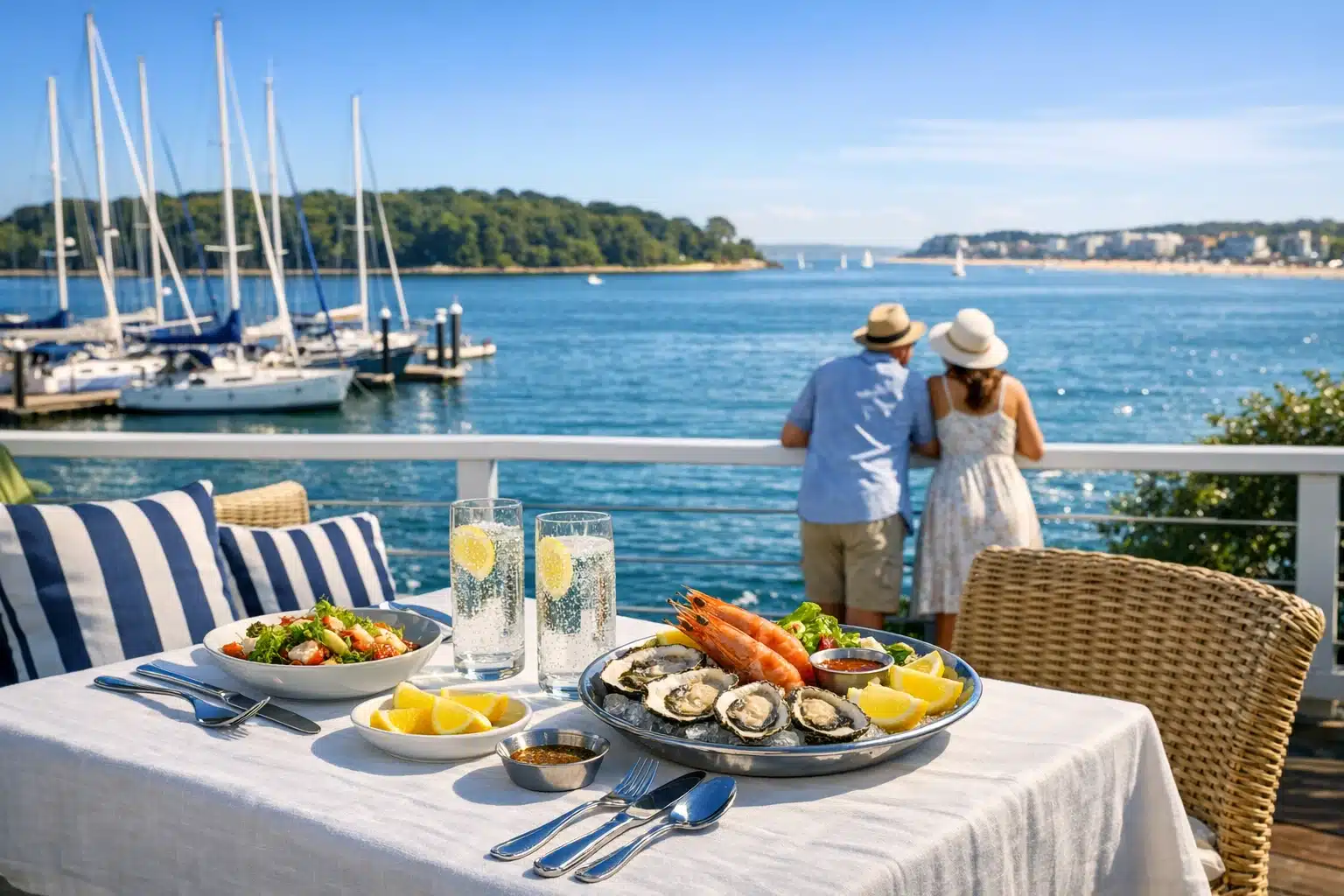
Food is a major part of the appeal. The area is known for seafood, casual cafés, harbour-side dining, and a generally polished but not overwhelmingly formal restaurant scene. You can find places geared towards a sunset drink, family lunch, or more refined dinner depending on budget and mood. Compared with a larger city, the choice is narrower, but the setting frequently compensates. Dining near the water has a quiet advantage over trendier urban meals: it slows the pace. People linger longer, order differently, and treat the evening as part of the holiday rather than a logistical stop between activities.
Nearby attractions add shape to a four-night stay:
- Brownsea Island offers woodland, wildlife, and views back across the harbour
- Poole Quay brings maritime atmosphere, boat trips, and a more traditional waterfront feel
- Studland, reached via the Sandbanks Ferry, provides a contrasting coastal landscape
- Bournemouth adds shops, gardens, and busier entertainment for those wanting more action
Transport planning is worth considering before arrival. If you are driving, parking availability and hotel arrangements should be checked early, especially in summer when coastal pressure increases. If you are arriving by train, Poole and Bournemouth are the most practical rail gateways, with taxis or local buses covering the final stretch. Once settled, many visitors discover they use the car less than expected. That is a strong sign of a good short-break base. You want movement to feel optional, not compulsory.
One of Sandbanks’ quiet strengths is that even your excursions keep the same maritime thread. A ferry ride, a quayside wander, a harbour cruise, or a coastal lunch all remain connected to the environment that drew you there in the first place. The day may expand beyond the sand, yet it never quite loses the briny, light-filled identity of the peninsula. That continuity is what makes the trip feel cohesive rather than fragmented.
Who Will Get the Most from a 4-Night Sandbanks Stay? Cost, Timing, and a Final Verdict
Sandbanks is not the cheapest way to book a UK coastal break, and pretending otherwise would be unhelpful. Prices can be notably higher than in less prestigious nearby areas, especially during school holidays, warm-weather weekends, and peak summer periods. The premium comes from a combination of limited supply, beach access, strong reputation, and the simple fact that many visitors are willing to pay for convenience. Whether that premium feels justified depends on the type of traveller you are.
For couples looking for a polished but low-effort short escape, the value can be strong. You are paying not only for a room, but also for reduced friction: fewer transfers, better views, a walkable seafront, and easy access to dining and scenic day trips. Families may also find good value if they choose apartment-style accommodation that reduces the cost of constant restaurant meals and makes beach logistics easier. By contrast, travellers who plan to spend most of the trip driving around Dorset may gain less from paying top Sandbanks rates; a base slightly inland or nearer Poole town centre could work better.
Timing makes a significant difference. Shoulder season often provides the smartest balance of comfort and cost. Late spring and early autumn can deliver pleasant walking weather, more space on the beach, and a calmer local atmosphere. High summer offers the fullest classic beach experience, but also the highest pressure on prices, parking, and restaurant availability. Winter has a different appeal altogether: dramatic skies, quieter paths, and a more reflective kind of coast break, ideal for readers who value scenery over swimming.
- Best for: couples, small families, celebratory short breaks, and travellers who prioritise location
- Less ideal for: bargain hunters, nightlife-led groups, or visitors wanting a large all-inclusive complex
- Best booking strategy: reserve early for summer and compare beachfront hotels with serviced apartments
The clearest conclusion is this: Sandbanks rewards people who want quality of setting more than quantity of attractions. It is for readers who like the idea of opening a door and already being where they hoped to be. If your ideal four-night trip includes sea air before breakfast, easy afternoon choices, and evenings shaped by light on the water rather than busy schedules, Sandbanks is a very strong fit. For that audience, the stay is not just a base in Poole. It becomes the holiday’s main character.